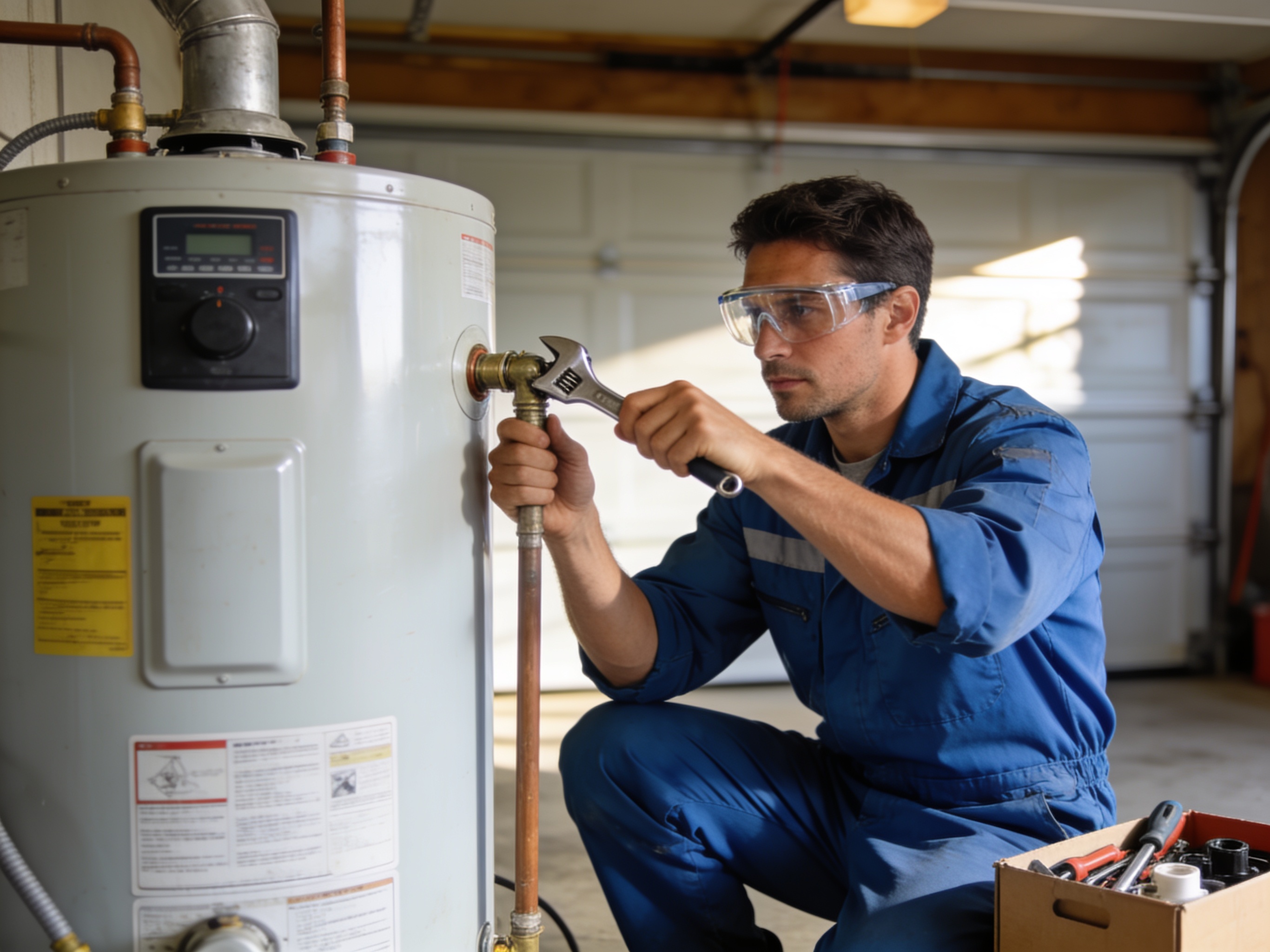
Palm Coast homes built in the 1980s and 1990s in neighborhoods like Palm Harbor and Indian Trails often have original electric or gas water heaters sitting on concrete slabs where soil moisture and humid subtropical summers speed up tank corrosion. Technicians see failed dip tubes and sediment buildup from Flagler County well water that shortens element life, especially when summer temperatures push units into constant recovery cycles. Repairs here require checking anode rods and venting before any work, because mild winters still allow enough humidity to create condensation issues inside cabinets that homeowners in Matanzas Woods frequently overlook.
Gas units common along routes toward Washington Oaks Gardens State Park need extra attention to thermocouple and gas control valve performance after heavy summer storms that raise local humidity levels. Electric models in Daytona Beach commuters' homes often fail from scale on lower elements when water hardness combines with the area's mild winter temperature swings that keep heaters running year-round. Code requires proper seismic strapping and expansion tank installation on any replacement work in Flagler County, and skipping these steps during repair can trigger inspection failures when properties change hands.
Technicians based at 25 Rocking Horse Dr routinely carry both 240-volt element kits and OEM gas valves because mixed housing stock in Palm Coast means one truck may service a 1992 model in Indian Trails and a 2015 unit near Flagler Beach on the same day. Always isolate power or gas at the panel before opening access panels, and test for leaks with a soap solution rather than relying on visual checks alone in high-humidity conditions that mask small drips until they become major floor damage.
Technician insight
In Palm Coast, the thing that catches most people out with Water Heater Repair is how quickly salt-tinged humidity from Flagler Beach and the intracoastal reaches homes in Matanzas Woods and Indian Trails, corroding tanks from the outside even when the water itself is not especially hard.
Sediment-clogged unit in Palm Harbor
Homeowner in Palm Harbor reported lukewarm water and popping noises. Inspection showed heavy sediment from years of Flagler County water and a failing lower element. Flushed the tank, replaced both elements and the anode rod, then verified venting. Unit recovered full temperature without further noise.
How it works
- 1
Initial Assessment
Arrive at the Palm Coast address, shut off power or gas, and inspect the tank, connections and venting for corrosion or sediment typical in Flagler County homes.
- 2
Diagnosis
Test elements, thermostats or gas valves with multimeter and pressure checks while noting local water conditions affecting the unit.
- 3
Repair Execution
Replace failed parts such as elements or valves, flush sediment, and verify anode rod condition before reassembly.
- 4
System Test and Safety Check
Restore power or gas, run the unit through cycles, check for leaks, and confirm proper venting and strapping meet Flagler County standards.
Pricing
Upfront quotes after inspection; final cost depends on parts needed and unit age.