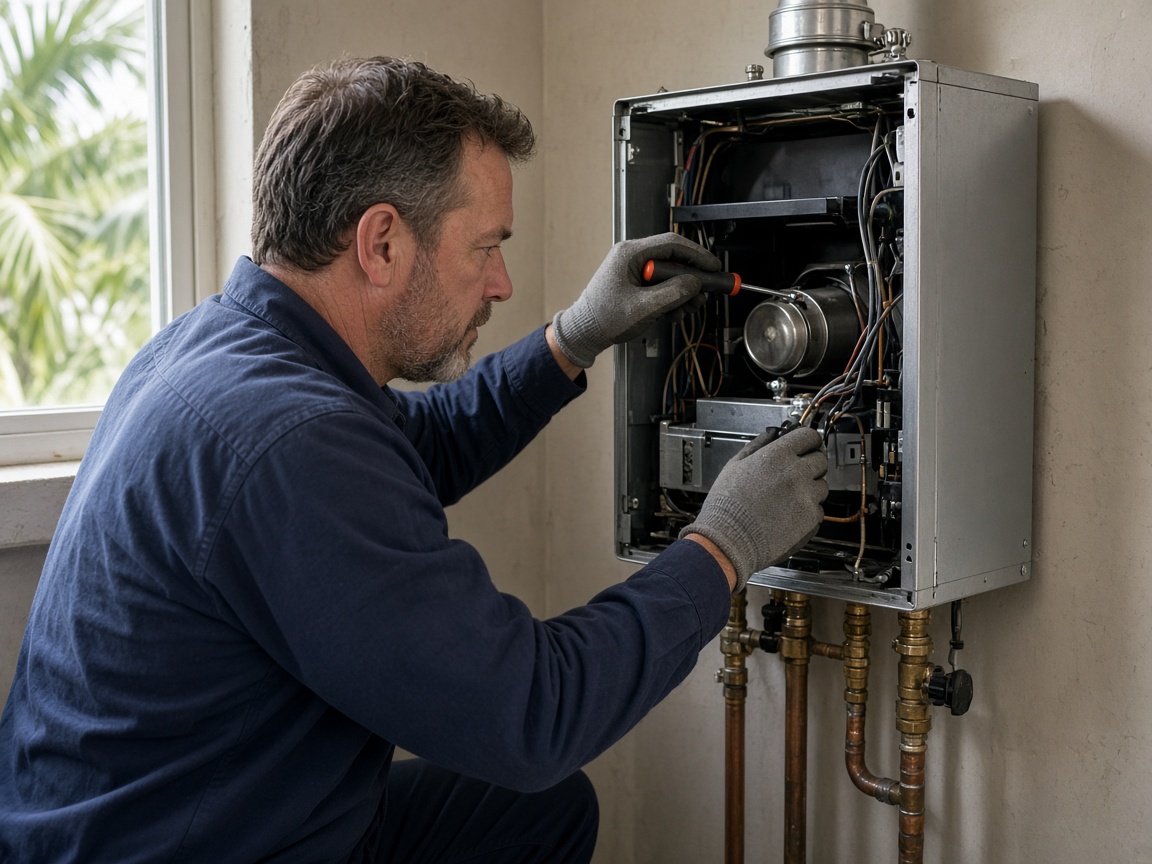
Tankless units in Palm Coast often develop scale on heat exchangers from Flagler County groundwater, especially in homes built decades ago in neighborhoods like Indian Trails. Hot summers increase usage and accelerate mineral deposits while mild winters keep systems running steadily without full shutdowns. Technicians at our base on 25 Rocking Horse Dr check flow sensors and ignition modules first because coastal humidity corrodes electrical connections faster than inland setups near St Augustine.
Repairs here differ from Daytona Beach jobs because Palm Coast terrain sits lower with more variable soil moisture that can affect venting runs on exterior walls. When a unit in Matanzas Woods shows error codes for overheating, the cause is usually restricted air intake from nearby vegetation at Washington Oaks Gardens State Park edges rather than a failed element. We flush with vinegar solutions matched to local hardness levels and replace gaskets that degrade quicker in the humid subtropical air.
Code compliance in Flagler County requires proper combustion air sizing for tankless models, and older Palm Harbor properties frequently need vent pipe upgrades when switching from traditional tanks. Skipping these steps leads to nuisance shutdowns during peak summer loads. Our process always includes testing gas pressure at the unit because coastal pressure drops are common after storms moving through from the Atlantic.
Technician insight
In Palm Coast, the thing that catches most people out with Tankless Water Heater Repair is mineral scaling on the heat exchanger from our groundwater in neighborhoods like Matanzas Woods, where homes from the 1980s and 1990s see faster buildup during the long hot summers even though winters stay mild.
Inconsistent Flow in Palm Harbor Home
A homeowner reported fluctuating temperatures on their tankless unit. We traced it to scale restricting the heat exchanger combined with a corroded flow sensor from local humidity. After flushing and replacing the sensor, the unit delivered steady hot water across all fixtures.
How it works
- 1
Initial Assessment
We arrive at the Palm Coast address and run the unit through diagnostic modes to read error codes while checking inlet water temperature from the local supply.
- 2
Component Inspection
Technicians remove the front cover and examine the heat exchanger, flow sensor, and gas valve for scale or corrosion common after years in Flagler County humidity.
- 3
Targeted Repair
We flush the system, replace faulty parts such as igniters or sensors, and verify venting integrity against county requirements before restoring power.
- 4
Final Testing
The unit is cycled multiple times at different flow rates to confirm stable temperatures and no leaks, then we document the work for the homeowner.
Pricing
Upfront quotes provided after on-site inspection of the specific unit and its condition.